

Eyes on the Water: How AI Technology Frees Plant Managers from the Trap of Faulty Sensors in DAF Plants
For plant managers, environmental officers, and wastewater treatment plant (WWTP) operators, stabilizing discharge values is a daily struggle. The pollutant load in industrial wastewater changes constantly and drastically, yet in most facilities, dosing engineering has remained behind. To avoid deviations and fines from the Ministry of Environmental Protection, many facilities find themselves in a permanent trap: dosing chemicals in massive excess and wasting huge budgets.
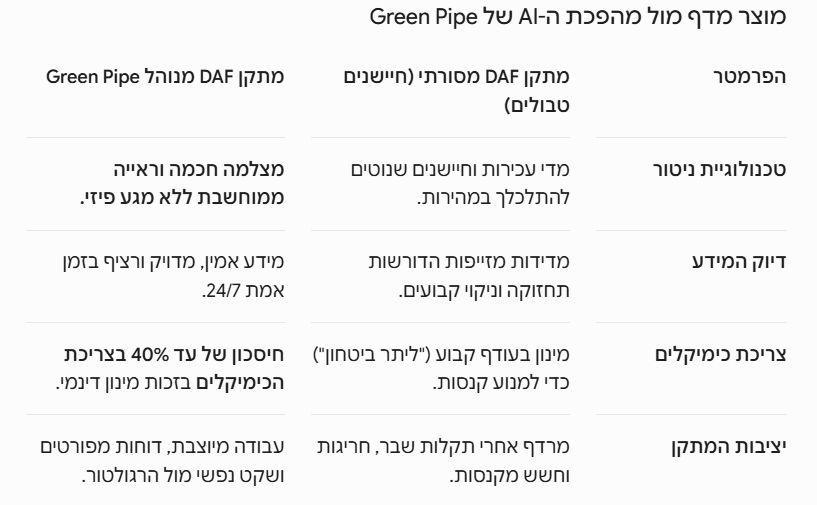
Why does this happen? Because of reliance on vulnerable technology. Most facilities rely on submerged sensors and turbidity meters. The problem with industrial wastewater is that it tends to quickly foul the sensor. When the sensor gets dirty, measurements become inaccurate, real-time data becomes unreliable, and operators are forced to "guess" the required chemical quantity and opt for the safe—and expensive—side: overdosing.
Greenfield Eco E.R.S. Ltd. brings the solution to this paradox, introducing the new industry standard: the Green Pipe system by Neuron Box – the AI and computer vision revolution for DAF (Dissolved Air Flotation) plants.
The Engineering Problem: The Submerged Sensor Paradox
In wastewater treatment plants (and especially in DAF-type separation systems), the direct contact of equipment with contaminated water, fats, and solids creates an inherent failure:
- Rapid loss of calibration: Standard turbidity meters and sensors require frequent cleaning and maintenance; otherwise, they are "blind."
- Slow and volatile response: The system cannot respond in real-time to changes in pollutant load, but only after the deviation has already occurred.
- Inflated OPEX (Operating Expenses): A waste of up to tens of percent in chemical procurement due to the need to "insure" the system against deviations through constant overdosing.
The Solution: A 24/7 Virtual Operator Without Physical Contact with the Water
The Green Pipe system changes the rules of the game through a combination of computer vision and Artificial Intelligence, enabling completely smart monitoring and dosing – without touching the water and without relying on sensors that give false readings:
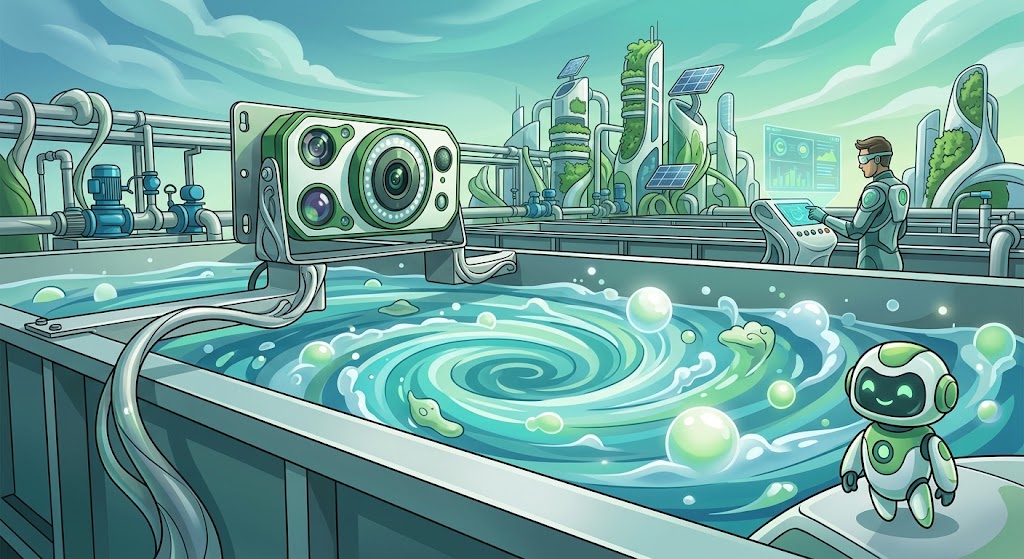
- Eyes on the Water (Computer Vision): A smart camera installed above the facility analyzes the wastewater optically. Since there is no physical contact with the effluent, the system does not get dirty, does not lose calibration, and provides accurate, reliable data at any given moment.
- 24/7 Virtual Operator (AI): The system is connected directly to the facility's controller (PLC) and dynamically calculates the exact amount of chemicals required at that very second according to the changing pollutant load. Dosing according to real need only.
- Full Management Control and Monitoring: Generation of detailed automatic reports, real-time alerts for plant managers, and a completely clear picture of treatment quality and regulatory compliance at any given moment.
 ### Proven in the Field: From Dairies to Slaughterhouses
Green Pipe technology is not theoretical – it is already operating in the field. The system is active and proving itself in several successful pilots in plants across the country, including the most challenging industries such as slaughterhouses and dairies. In these plants, where the load of fats and organic pollutants varies drastically between shifts, the Green Pipe AI system stabilizes operations, prevents deviations, and delivers the promised economic savings in chemical consumption.
Stop Guessing and Start Saving
Don't let dirty sensors manage your plant's chemical budget. It's time to move to smart, precise, and stable management that will give you full peace of mind, detailed reports, and immediate savings in OPEX.